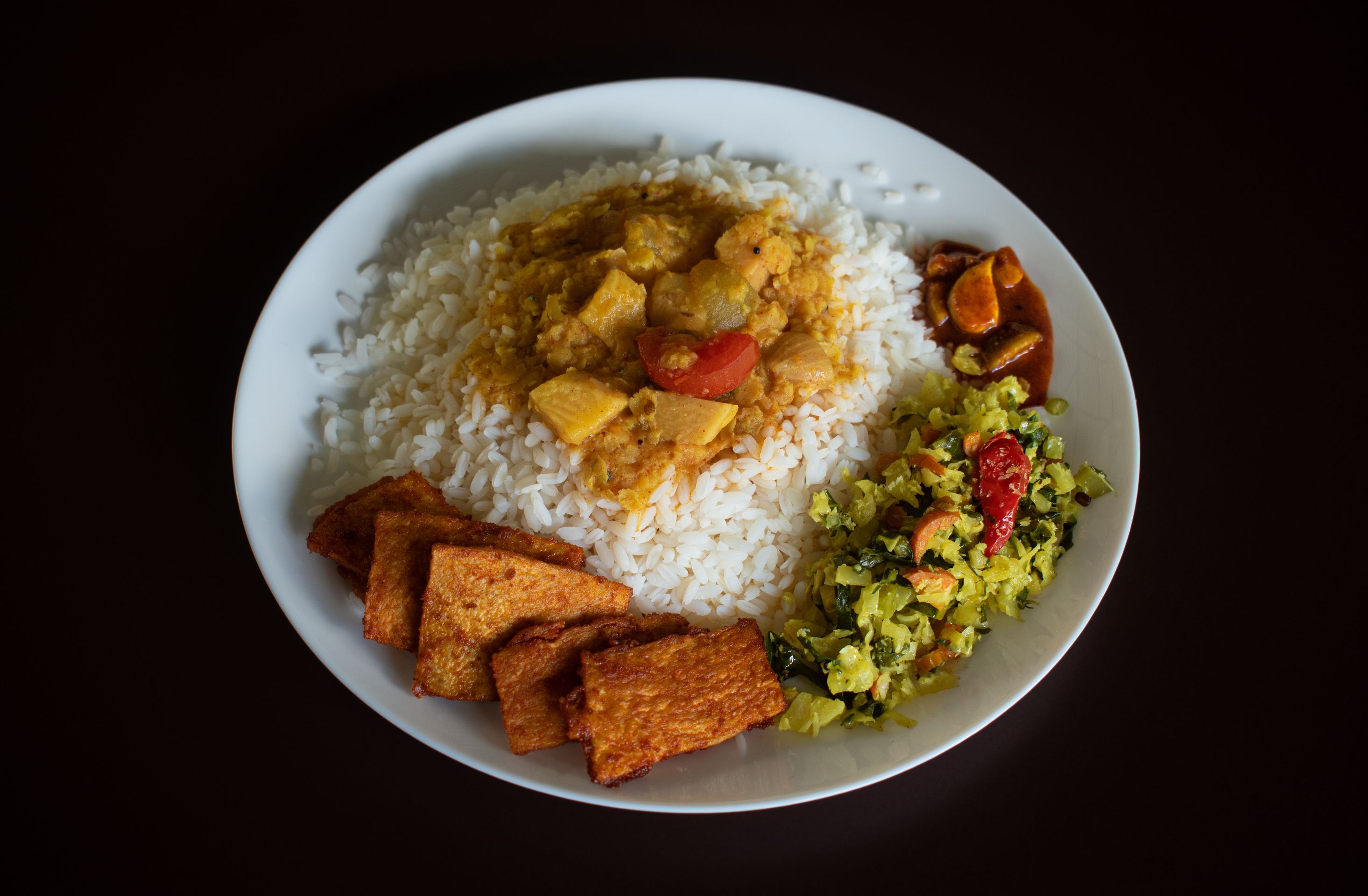
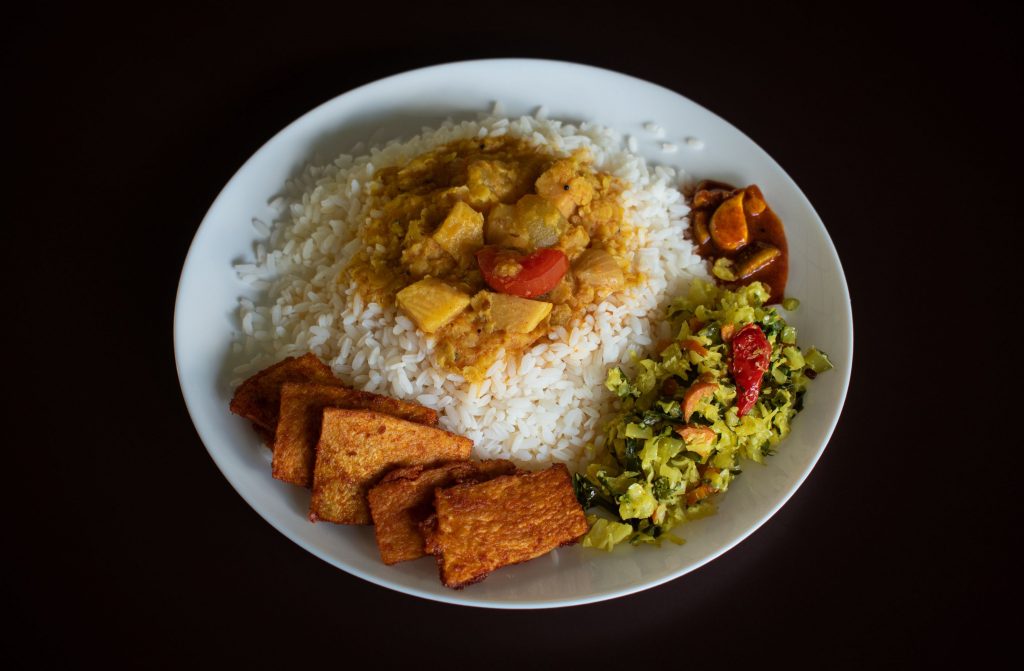
Rice with organic homegrown vegetables. Fragrant, mouthwatering elephant foot yam sambar poured over the rice, crunchy collard, cabbage and carrot stir fry, hot and tangy lemon and garlic pickle, and hot and spicy elephant foot yam chips. The natural sweetness of the organic yam makes it a gourmet’s delight!
Elephant Foot Yam
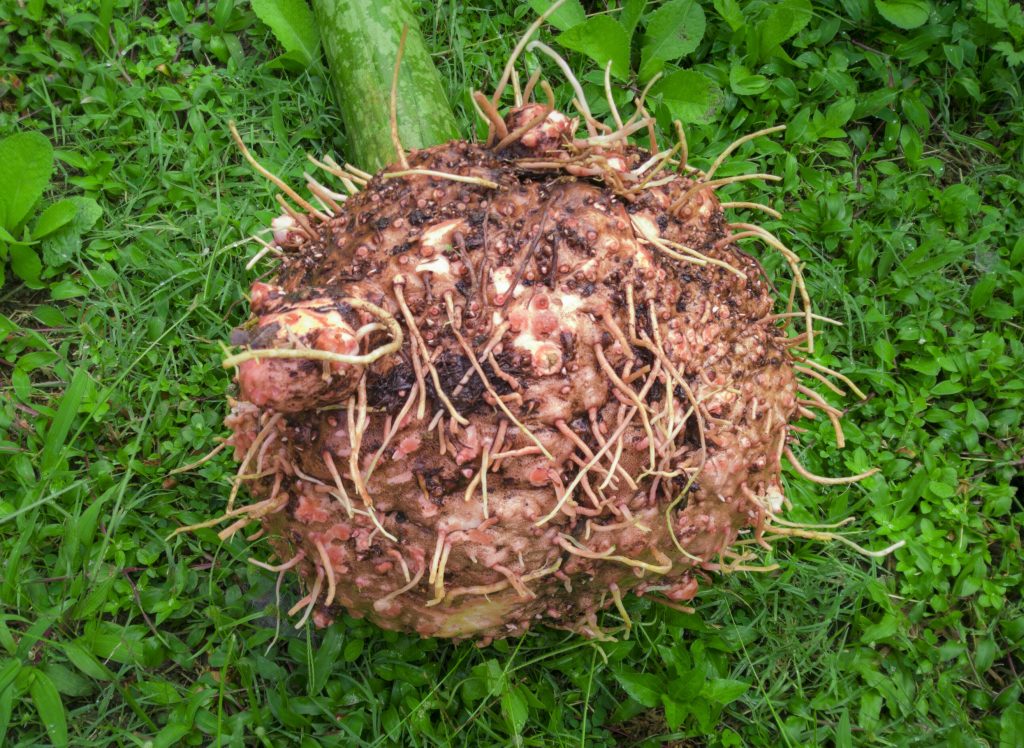
Elephant foot yam, when in season, is one of the favoured vegetables of the people of Kerala. Fresh organic elephant foot yams, when cooked well, become soft as butter and are extraordinarily tasty. They are so filling that the village folk even have them as chunks simply boiled with salt, as a complete meal by itself. They also enhance the taste and substance of delicious Kerala curries such as Saambar, Aviyal, Olan and Toran.
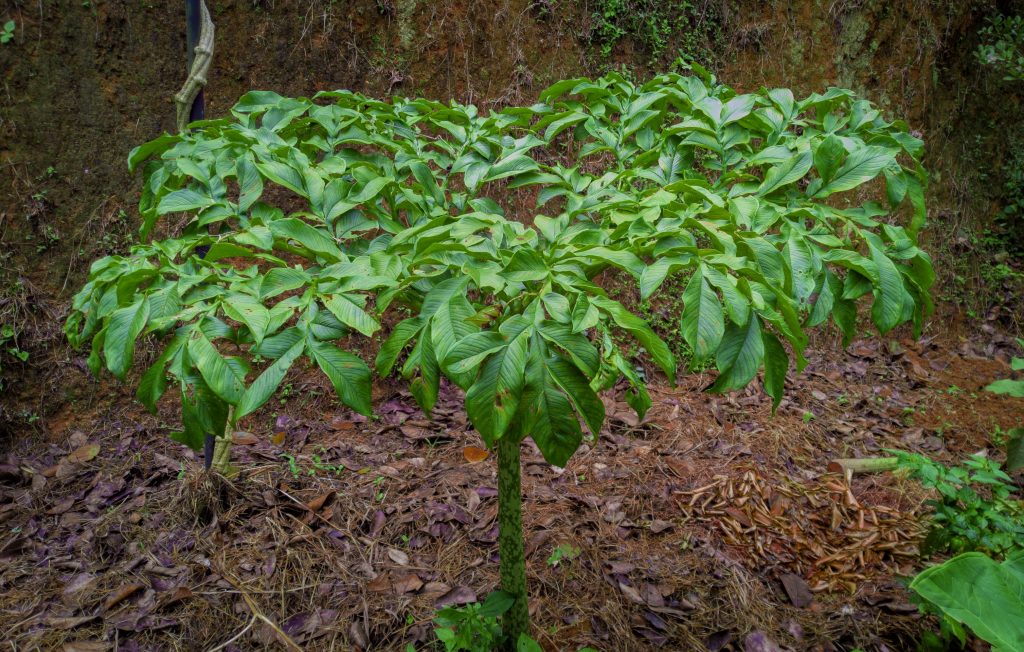
We plant them before the rains as one pound pieces (450 gms), pre dried in the shade, in shallow pits along with a little farmyard manure, compost, leaf mold or hay. As they only have surface feeding roots, they are later given some more organic fertilizer, green leaf manure or just a dressing of top soil, a couple of months later, without disturbing the roots. In around 5 months, by the end of the rainy season, the plants turn yellow and die back, signifying that the yams are ready to be dug up.
Depending on care as well as the size of the seed piece, you can get anything from 5 pounds (above 2 kg) to a hundred pounds (45 kg) or more from a plant. These yams cannot be eaten raw, as they contain calcium oxalate, which causes severe itching, nature’s way of protecting them from rats! The oxalate, however, is neutralized in cooking. So it’s best if the if the yam is cooked until soft to make yourself a mouthwatering meal.
You can also deep fry them as yummy, spicy, yam chips! The Konkani people also make a hot yam pickle served with fluffy idlies, which is sheer finger biting goodness!
If the yam is left in the ground, next year, during the pre monsoon showers, a huge bloom comes out, which, when cooked, is unbelievably scrumptious. The tender stems of the plant too, when peeled and cooked, are delicious and soft as butter.
If you live in a warm country with a bit of a garden, this is one of the plants that you definitely shouldn’t miss planting! In cold countries, they can be grown in heated green houses or outside during summer.


